
A 12-Week Training System in Motion, Timing, Structure, and Strategy
Stop Collecting Isolated Techniques. Learn to See the Fight.
The Kosho Method
Most martial artists train harder, memorize more, and add more techniques. Yet under pressure, the pieces still fail to come together.
The Kosho Method teaches you to recognize intention, structure, timing, and movement earlier, so your response becomes simpler, more precise, and more effective.
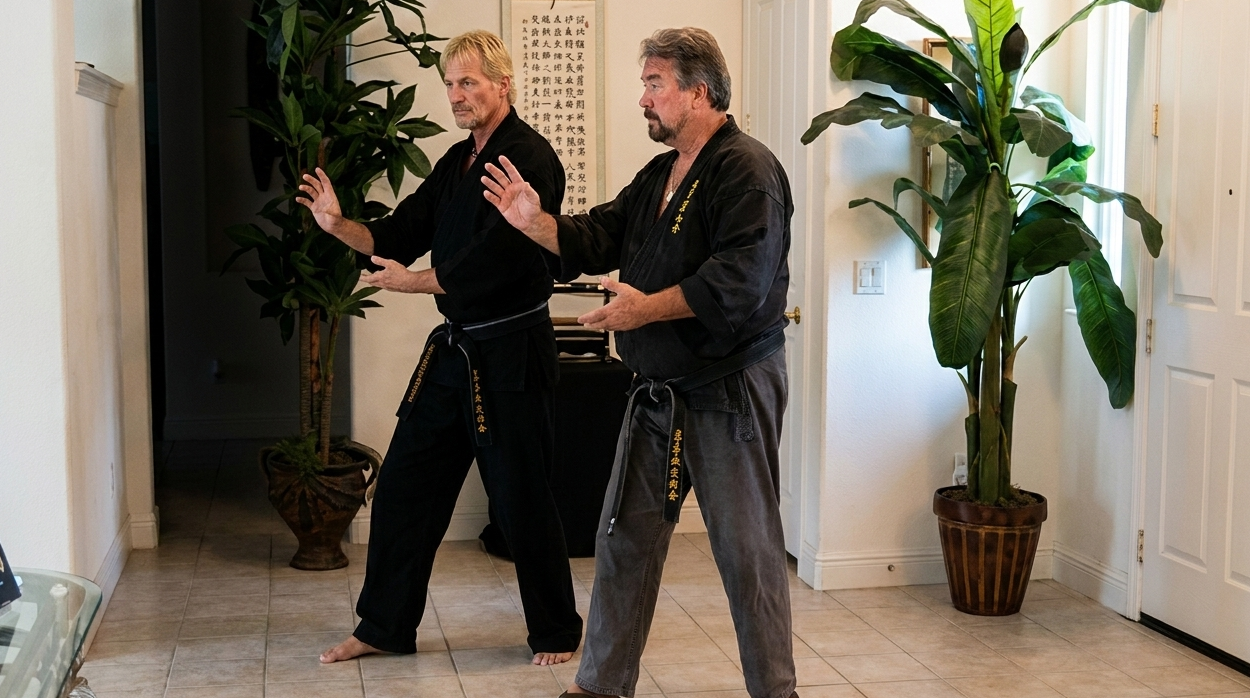
12-week online course • Lifetime access • Weekly video lessons
The Problem
You Do Not Need Another Collection of Techniques
You have collected combinations, drills, forms, counters, and applications, often over years or decades.
Yet something can still feel incomplete.
You know more, but you do not always see sooner, and the right response does not always appear when timing, pressure, or distance changes.
The problem is not your effort. It is the way the material was organized and taught.
Traditional martial arts contain generations of practical knowledge, separated into isolated techniques and rehearsed sequences that work only when the situation follows the script.
You were taught what to do. The Kosho Method teaches you what to see.
Instead of memorizing more combinations
↓
Learn to recognize the structural and positional conditions that make a response appropriate.
Instead of trying to become faster
↓
Learn to move earlier by reading intention, alignment, and timing.
Instead of forcing a rehearsed application
↓
Learn to adapt principles as distance, pressure, and direction change.
Instead of treating kata as choreography
↓
Learn to examine the decisions and strategy encoded inside the movement.
The Transformation
What Begins to Change When You See Differently
See intention earlier
Recognize the structural and behavioral cues that appear before the obvious attack.
Escape before collision
Alter position, relationship, and direction before force fully develops.
Disrupt timing and structure
Interfere with the conditions that allow power to form, rather than meeting it at its strongest point.
Respond through principle
Adapt with a framework instead of one answer for one attack.
The goal is not to add more material to remember. The goal is to make what you already know more usable.
The Shift
What Opens Once You Train This Way
- ✓Recognize useful information before the attack fully develops.
- ✓Understand why a technique works rather than merely repeating its sequence.
- ✓Adjust when distance, direction, rhythm, or pressure changes.
- ✓Connect kata, strategy, timing, and application.
- ✓Make more of your existing martial knowledge usable.
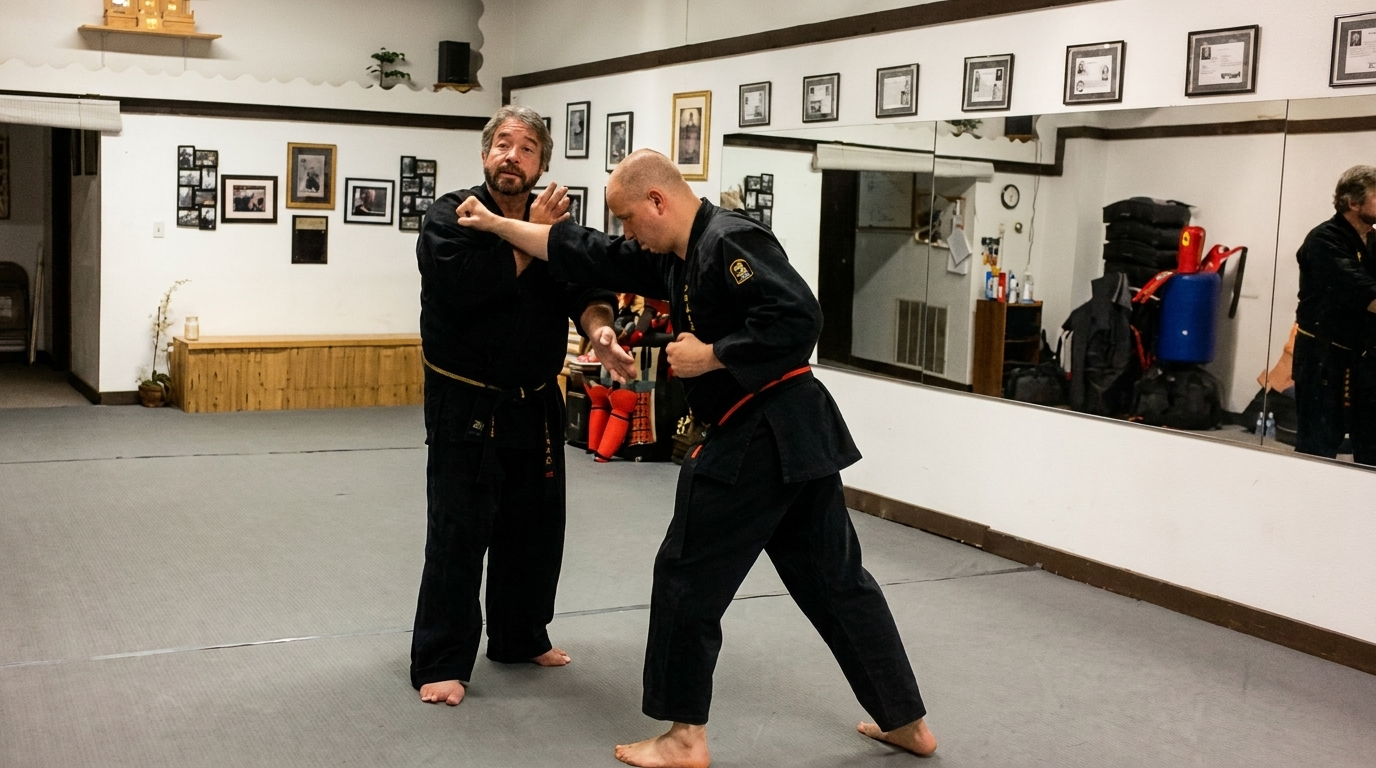
A Message From Hanshi
The 12 Weeks Are a Beginning, Not an Ending
The Kosho Method was created to begin a deeper process of study.
In this original introduction, Hanshi explains why martial arts growth does not have a quick beginning and end. The course provides a structured starting point, but its larger purpose is to help you continue learning, recognize the value within different traditions, and see the principles that connect them.
The goal is not to replace your current art. It is to give you another way to understand it.
About this video: This introduction was recorded when The Kosho Method was originally created. References to the Warrior Scholar Library and additional programs reflect the offerings available at that time. The central message of continued growth and lifelong study remains at the heart of the course.
The Curriculum
12 Weeks. Three Progressive Phases. One Connected Method.
The Kosho Method organizes perception, movement, timing, structure, and strategy into a progressive course of study.
Each phase builds upon the one before it, helping you move beyond isolated techniques and begin recognizing the relationships that make those techniques effective.
Weeks 1–4
Perception and Escape
Learn to recognize intention through structure, movement, and relationship.
Explore how escape begins before engagement, before collision, and before impact.
Shift your attention away from isolated attacks and toward the conditions that make the attack possible.
Weeks 5–8
Disruption and Timing
Learn to disrupt an opponent's timing before power fully develops.
Study how position, rhythm, direction, and the Octagon affect your options.
Replace late reaction with earlier intervention.
Weeks 9–12
Integration and Application
Layer the principles together so they become part of one adaptable process.
Connect perception, movement, timing, structure, and strategy.
Kata instruction includes Miyama no Shodan, taught with a full Bunkai breakdown.
This Is a Progressive Training System
The material is organized to build perception before application and understanding before accumulation. Later lessons depend on the way the earlier principles change how you observe movement.
This is not a random library of unrelated techniques. It is a sequence intended to change the way the pieces connect.
The Instructor
Meet Your Instructor
Introduction
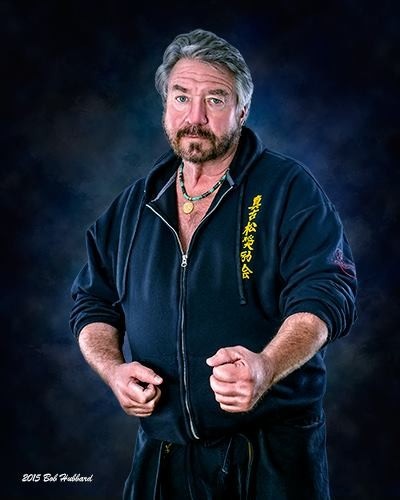
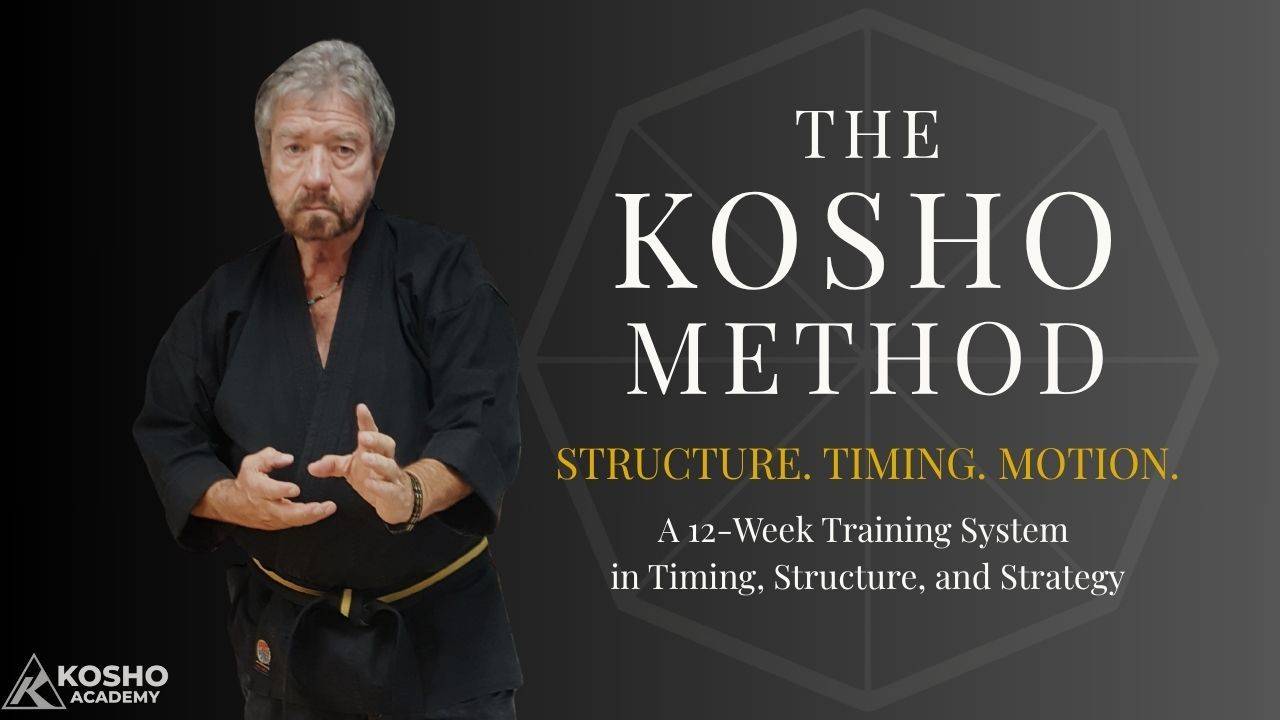
Hanshi Bruce Juchnik is the 22nd inheritor of Kosho Ryu Kempo, passed to him directly by James Mitose. He is director of Sei Kosho Shorei Kai International and founder of the Martial Arts Collective Society.
Training and Teaching Background
- ✓Training and teaching continuously since the 1970s, more than five decades in the arts, having trained and influenced thousands of practitioners around the world.
- ✓Direct instruction from James Mitose, including personal meetings in which Mitose entrusted him with preserving the teachings. Robert Trias personally taught him the form Juni Ippo and gave his blessing to continue the work. Training was also shaped by teachers including Angel Cabales, Remy Presas, and Kuo Lien-Ying.
- ✓Host of The Gathering for 44 years, the first and longest-running event of its kind, bringing students of all ranks and styles together to train side by side, in the spirit of unity across traditions.
Development of The Kosho Method
Hanshi Juchnik has written several books, including The Last Disciple, To Fall Seven, Rise Eight, Reflections, and Okuden: Advanced Martial Strategies, and produced more than 300 training videos documenting these teachings.
Why the Course Was Created
The Kosho Method continues that same purpose: to pass forward what was entrusted to him, and to teach the perception behind the movement rather than technique alone, before that understanding is lost.
The purpose of this course is not to replace your art. It is to help you perceive more of what your art has been trying to teach you.
Lineage
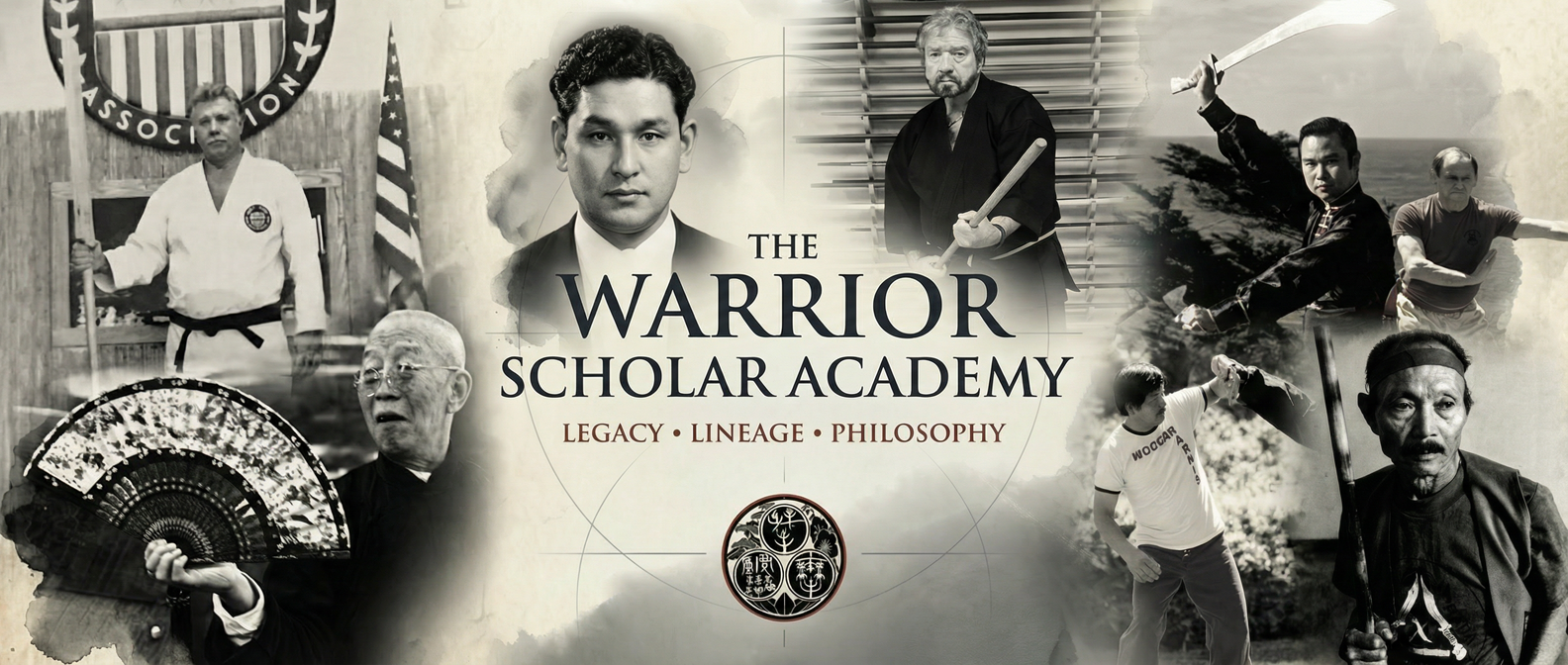
Training Grounded in History and Lineage
The physical curriculum is supported by historical lessons examining the people, ideas, and relationships that shaped the development of the art.
These lessons provide context for the principles being practiced and help explain how particular methods and interpretations developed.
Historical lessons include examinations of:
- James Mitose
- Thomas Young
- Robert Trias
- Imi Okazaki
- Remy Presas
- Bing Fai Lau
- Danny Inosanto
- Rick Alemany
- Dennis Palumbo
- Wally Jay
- Dennis Decker
- Nick Cerio
Bonus Material
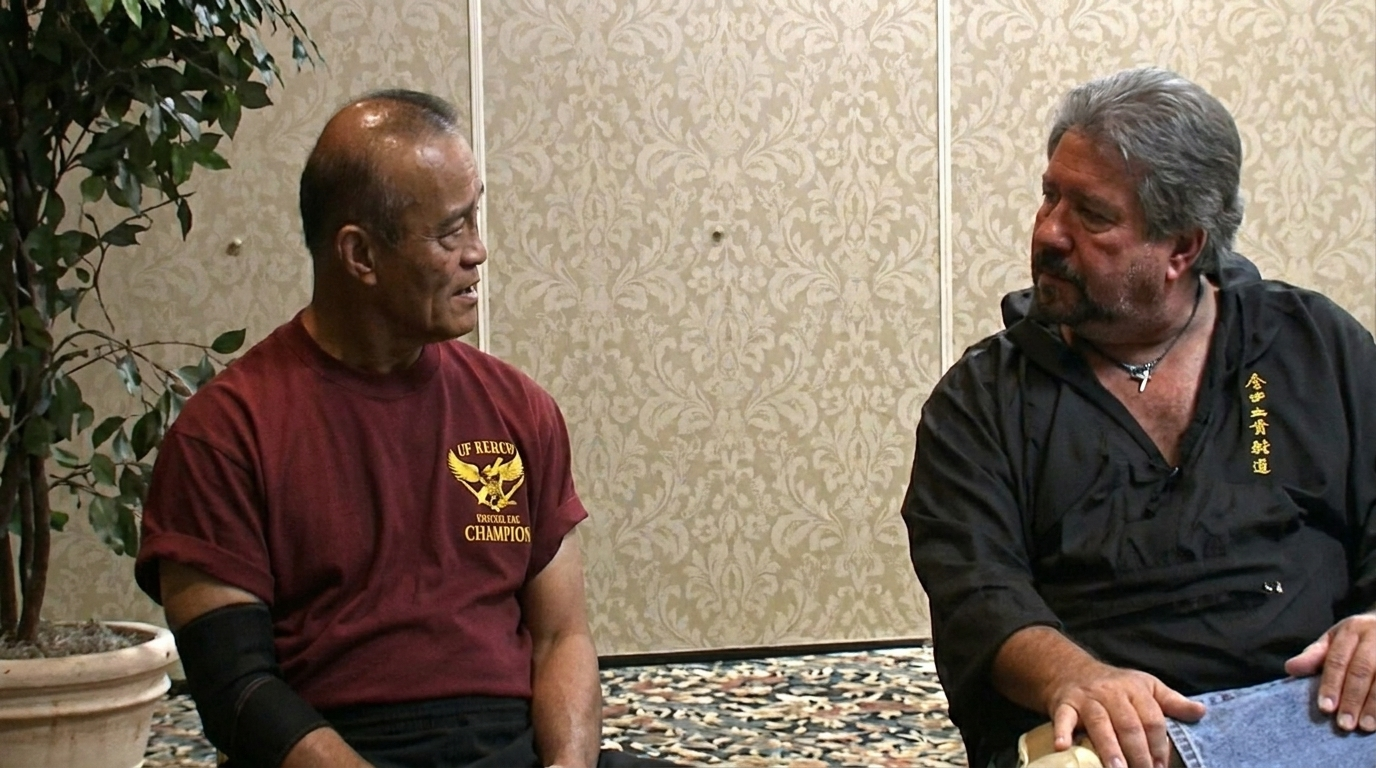
Bonus: The Gathering, 1998
Go beyond the formal curriculum with rare archival material from The Gathering, including a Danny Inosanto interview and Wally Jay teaching footage from the event.
This material gives students an opportunity to observe how experienced teachers communicated principles in a live training environment and to encounter a piece of martial-arts history that is not commonly available.
The Offer
What You Receive When You Enroll
Core Training
- ✓The complete 12-week Kosho Method course
- ✓Three curriculum phases – Perception and Escape, Disruption and Timing, and Integration and Application.
- ✓Miyama no Shodan instruction, taught with a full Bunkai breakdown.
- ✓More than 70 video lessons, released on a weekly schedule.
- ✓The Hidden Wisdom of Kata eBook
- ✓Lifetime access, on web and through the Kajabi mobile app.
- ✓Email access to a senior instructor for questions about the material.
Historical and Bonus Material
- ✓Historical lessons connected to the figures included in the course.
- ✓Bonus footage from The Gathering, 1998
- ✓The Danny Inosanto interview
- ✓Wally Jay teaching footage
Getting Started
What Happens After You Enroll
Questions about the material can be sent by email. There is no live coaching or group support at this time, though that may be added in the future.
1
Complete Your Enrollment
Use the secure checkout to enroll in The Kosho Method.
2
Receive Course Access
Your course-access instructions will be sent to the email used during checkout.
3
Begin with Week One
Start at the beginning and progress through the course in sequence, so each phase builds on the one before it.
Enrollment
Begin Your Training
Instead of collecting more material, begin developing a clearer way to interpret what you already know.
The Kosho Method is a 12-week process for connecting intention, motion, timing, structure, and strategy into one encounter.
- ✓Complete 12-week Kosho Method curriculum
- ✓Physical training in motion, timing, structure, and strategy
- ✓Historical and lineage lessons
- ✓Miyama no Shodan and Bunkai material
- ✓The Gathering, 1998 bonus footage
Limited-Time Price
$397$297
30-day money-back guarantee.
If The Kosho Method is not right for you, request a refund within 30 days of enrollment.
Enroll in The Kosho Method >>
FAQ
Questions Before You Begin
Is The Kosho Method tied to one martial-art style?
How experienced should I be before taking the course?
Can I train the material alone, or will I need a partner?
How much time should I set aside each week?
Is the course self-paced or released over 12 weeks?
How long will I have access?
What equipment or training space will I need?
Does the course include live coaching or instructor feedback?
Can instructors use these principles in their own teaching?
What is the refund policy?
You Already Have Techniques. Now Learn to See When and Why They Work.
The Kosho Method gives you 12 weeks to examine motion, timing, structure, and strategy through one connected training process.
Begin organizing what you know around principles you can recognize, test, and apply.
Enroll in The Kosho Method ($297) >>Secure checkout • Lifetime access • 30-day money-back guarantee